
Maximum speed across open terrain
Payload capacity
Towing capacity
Reconfigurable mission profiles, one chassis
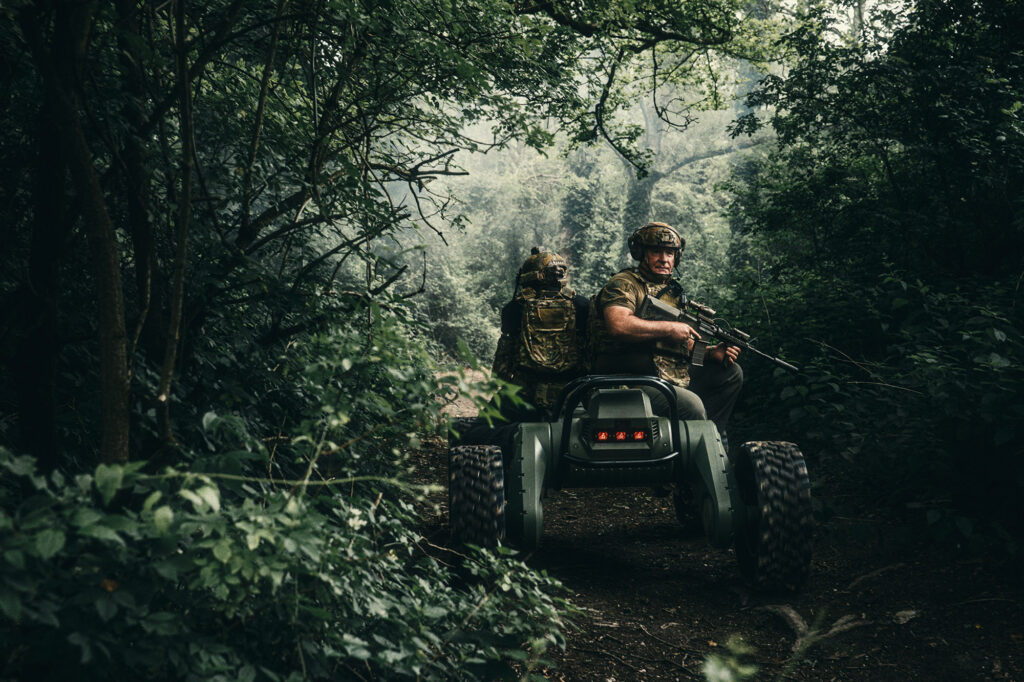
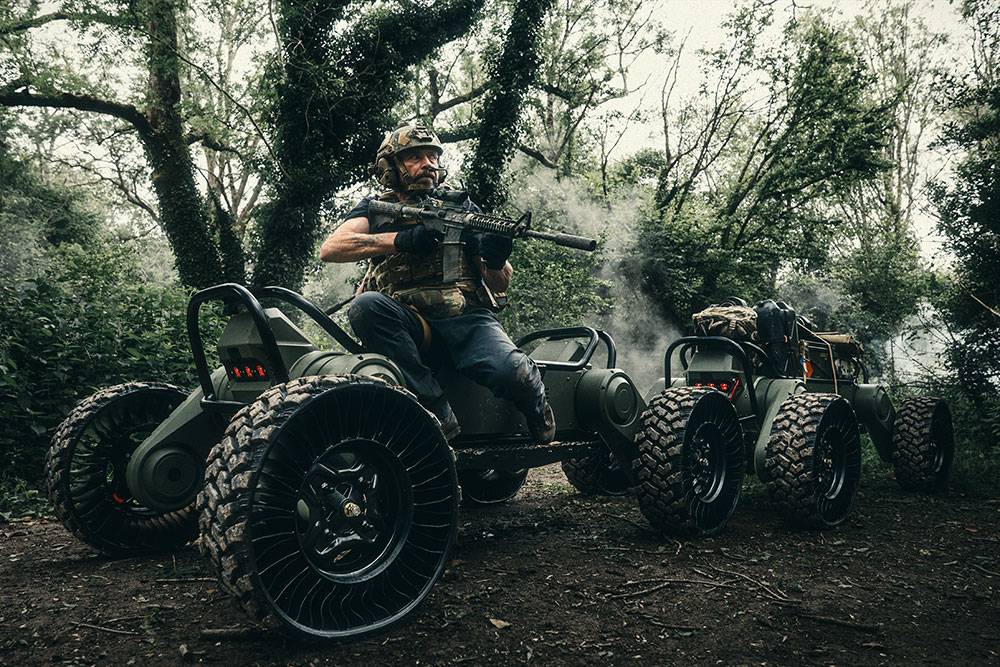
Paris, France - 15 June 2026 - VisionWave Holdings, Inc. (Nasdaq: VWAV) today launched its new Uncrewed Ground Vehicle (UGV), at Eurosatory 2026. Known as VARAN, it is designed to operate autonomously, even in GPS-denied and jammed conditions, minimising its detectable emissions. Developed in response to lessons from Ukraine, the vehicle is designed and engineered in the UK.
Most ground robots rely on active radar, laser scanning, or a constant radio link to sense their surroundings. Each of those gives off a signal an enemy can detect and target. This vehicle is designed to navigate using cameras, thermal imaging, and 3D vision alone. It can plan its route onboard, with no operator link required. A unit can push it forward into hostile territory without it betraying its position, or theirs.
This seeks to answer the problem seen in Ukraine. Cheap drones, constant surveillance, and electronic warfare now punish any system that reveals itself. Jammed and GPS-denied conditions are treated as the normal case. The vehicle is designed to keep working where GPS and radio-dependent systems fail.
A height-adjustable chassis on extendable wheel arms automatically changes the vehicle's stance to suit the ground. VARAN runs low and fast across open terrain at up to 45mph (72km/h). It can then rise to clear water, rubble, and urban obstacles, with no operator input. Each wheel drives independently, so it turns on the spot in tight spaces. The goal of the vehicle is to allow an operator to no longer need to plan a route around bad ground or stop to reconfigure. It is designed with the goal of reaching positions that would otherwise need soldiers on foot.
If a wheel arm is damaged, the vehicle keeps moving. It completes the mission and returns to friendly lines under its own power, costing neither the mission nor a recovery under fire.
A single chassis is designed to fulfil multiple mission roles. These include Intelligence, Surveillance, Target Acquisition & Reconnaissance (ISTAR), air defence, counter uncrewed aerial systems, casualty evacuation, logistics, route clearance, force protection, electronic warfare support, and forward observation. The operator simply changes payload modules in the field, re-tasking it for a mission change, without returning to base. One platform covers jobs that would otherwise tie up several specialist vehicles and teams. VARAN can carry up to 400kg and tow more than 1,000kg, taking the weight burden off soldiers.
The vehicle is built to be fully repaired in the field. It uses common modular parts, backup motors, and health monitoring as standard. The crew can therefore fix it wherever they are, keeping it operational and allowing operation well away from support infrastructure.
An open design lets nations fit their own sensors, encryption, and payloads. They manage their own through-life support, rather than accepting a sealed system they cannot adapt. The platform is engineered in the UK, with manufacture planned through local partners. The aim is to let adopting nations build sovereign capability around it.
"Traditional ground robots are too expensive, too complex, and too fragile to field at the scale modern operations demand,"
said Jeremy Williman, the British inventor of VARAN and Managing Director of VisionWave UK and Europe.
"We started from the operator in the field, not the engineer in the depot. The result is a platform that keeps working when the link drops, the GPS dies, or the ground gets trickier."
The vehicle is the flagship of VisionWave's STRATUM(TM) ecosystem. This is a connected family of air and ground platforms that share common parts, training, and support.
Intelligence for Autonomous Systems
Operational Headquarters
1063 N Spaulding Ave West Hollywood CA 90046 U.S.A
Corporate Address
300 Delaware Ave Suite 210 #301 Wilmington DE 19801 U.S.A